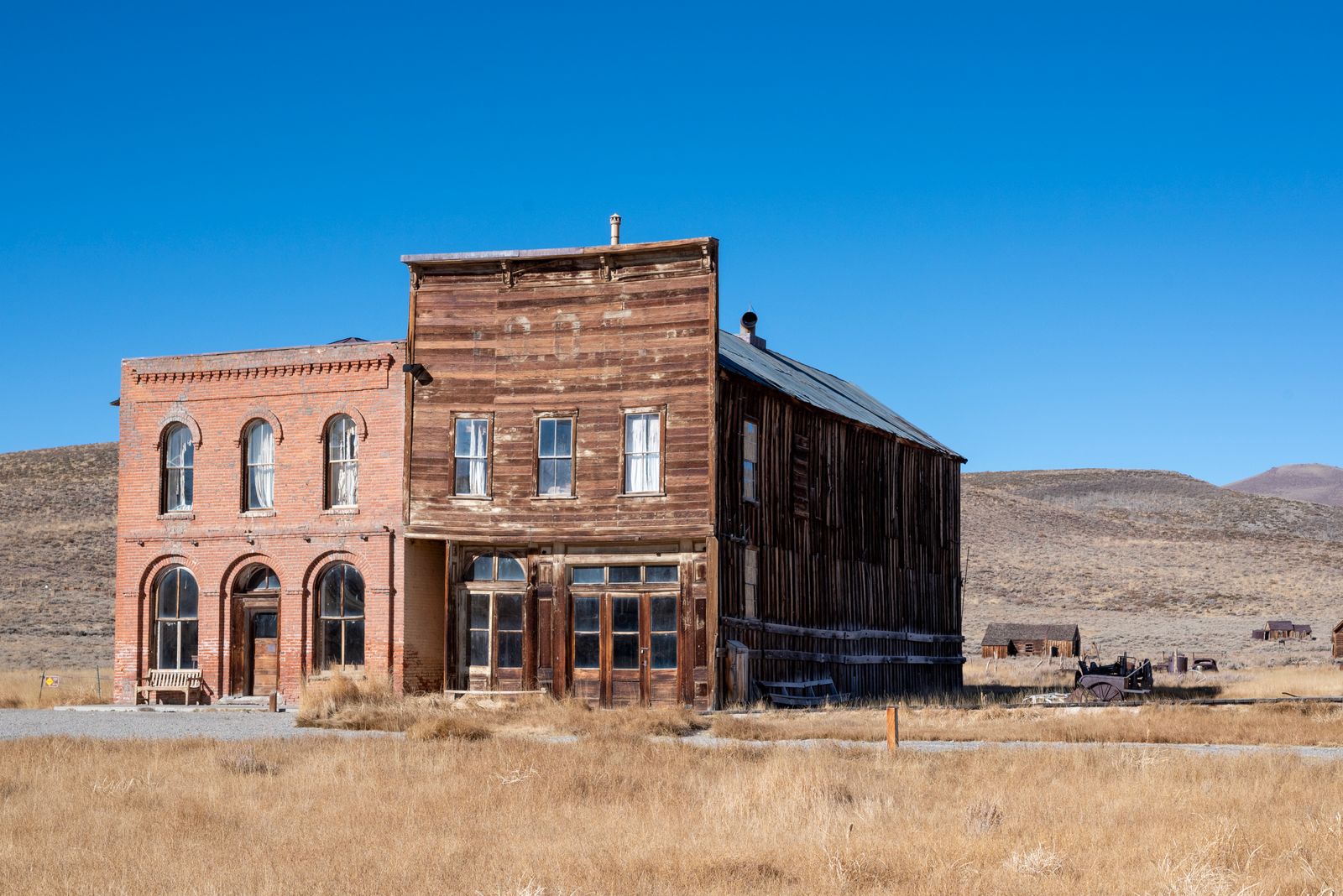
Subject
Ghost towns
The word suggests emptiness. In practice the best of them hold a couple of dozen people who are tired of being photographed through their kitchen window.
What the word actually covers
There is no official definition, which is why lists disagree so wildly. In practice three different things get called a ghost town, and they need different handling.
Truly abandoned sites have nobody living there: foundations, maybe standing walls, usually on public land or a mining claim. Near-ghosts have a resident population in the dozens, like Ophir in Utah with twenty four people or Cherry Creek in Nevada with seventy two. Preserved towns are managed as historic sites and charge admission.
The middle category is the interesting one and the one most likely to get a visitor in trouble. A building that looks derelict is quite often somebody's outbuilding, and the owner lives four doors down.
Covered here
Ground rules
Mining claims are private property even when the ground looks like open desert, and the people who hold them are used to explaining this. Standing structures are usually owned by somebody. Cemeteries are still in use more often than you would expect: Iosepa's is visited every year by descendants of the people buried there.
The physical hazards are real too. Shafts get hidden by brush, timbers rot, and mill sites carry heavy metals in the soil. Photograph from outside, and do not go into anything with a roof or a hole.
We do not publish coordinates for unprotected sites that are not already documented publicly. The ones that survived did so partly by being awkward to find.
Common questions
- Is it legal to visit a ghost town?
- It depends entirely on who owns the ground. Sites run as state parks or by the Bureau of Land Management are open and signed. Many others sit on private land or on active mining claims, and a claim is private property even when it looks like open desert. Where a town still has residents, the standing buildings usually belong to somebody who lives four doors down.
- What is the difference between a ghost town and an abandoned town?
- There is no official definition, which is why lists disagree. In practice three things get called a ghost town: sites with nobody living there at all, near-ghosts with a resident population in the dozens, and preserved towns run as historic sites that charge admission. The middle group is the most interesting and the easiest to get wrong.
- Can you go inside the buildings?
- Almost never, and you should not want to. Timber rots from the roof down and the sill up, so a structure that looks sound from outside may have nothing holding the floor. Preserved sites such as Bannack in Montana are the exception: there the buildings have been stabilised and are open on purpose.
- Which ghost town is the best one to start with?
- Bodie in California if you want an unrestored town held in arrested decay, Bannack in Montana if you want to walk inside the buildings, and Calico in California if you want easy access off an interstate and do not mind that most of it is a reconstruction.
- Are ghost towns dangerous?
- The hazards are open shafts hidden by brush, collapsing structures, and contaminated ground at mill and smelter sites. Bayhorse in Idaho stayed closed to the public for years because of heavy metals in the soil. Stay out of workings, do not dig, and wash before you eat.